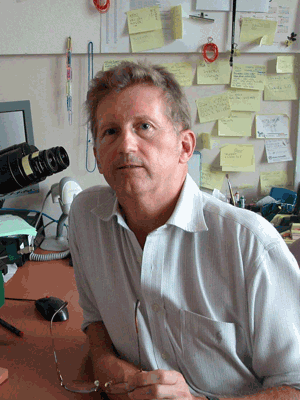
A short secular autobiography
I was born in England and qualified in Medicine from
Cambridge University in 1976.
After training in Cellular Pathology I have pursued a varied career in hospitals in Holland, Saudi Arabia, United Arab Emirates, and latterly in Singapore, my current home.
I have had an academic interest in children's pathology,
and in 1993 gained a PhD from Amsterdam University onthe subject of kidney tumors in children.
Currently I work part-time in UK and Singapore hospitals tosupport a writing career.
. . . and the Pharisee Church?
After becoming a Christian in my first year of University, and subsequently spending time as a cult member, I spent many years as a chronic church-hopper, struggling unsuccessfully to integrate. All too often God and the church seemed to be pulling in opposite directions.
All became a lot clearer with my dawning understanding of the Pharisee Principle and the Pharisee Church, those taboo subjects that everyoneseemed to rationalize out of existence.
The last couple of years have been taken up with writing How to Survive in the Pharisee Church and Other Questions for Confused Christians.
I still struggle to be accepted as part of a local church. Sometimes it seems to me that the more ardently people believe in the inspiration and infallibility of the bible, the less they are inclined to actually do what it says, and 'do unto others as you would haveothers do to you'. I comfort myself that if everything was running smoothly in my churchlife, then I'd have nothing to write about; so perhaps it's better this way.
Who we are
At our education center, we believe in personalized learning experiences tailored to fit each unique journey. Schedule your appointment today, and let us guide you toward unlocking your full potential in a friendly, supportive environment.
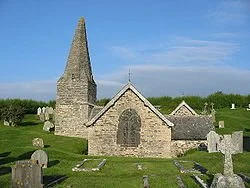
ST. ENEDOC, TREBETHERICK, CORNWALL,
The church was built among shifting sand dunes. The oldest parts date from the 12th century.
From the 16th century to the middle of the 19th century the church was almost completely buried by the moving sands,giving it its popular name among the local people of "Sinking Neddy".
To maintain its entitlement to tithes from the surrounding landowners, the church had to hold a service at least once a year. To do this the vicar and parishioners made a hole in the roof and were lowered into the sanctuary, this being the only means of access left to them.
In the 19th century the church was dug out and the dunes stabilized with vegetation.
More recently the church has become know as the burial place of the poet John Betjeman.
This is incidentally another church with a bent spire.
Contact us
Interested in working together? Fill out some info and we will be in touch shortly. We can’t wait to hear from you!